
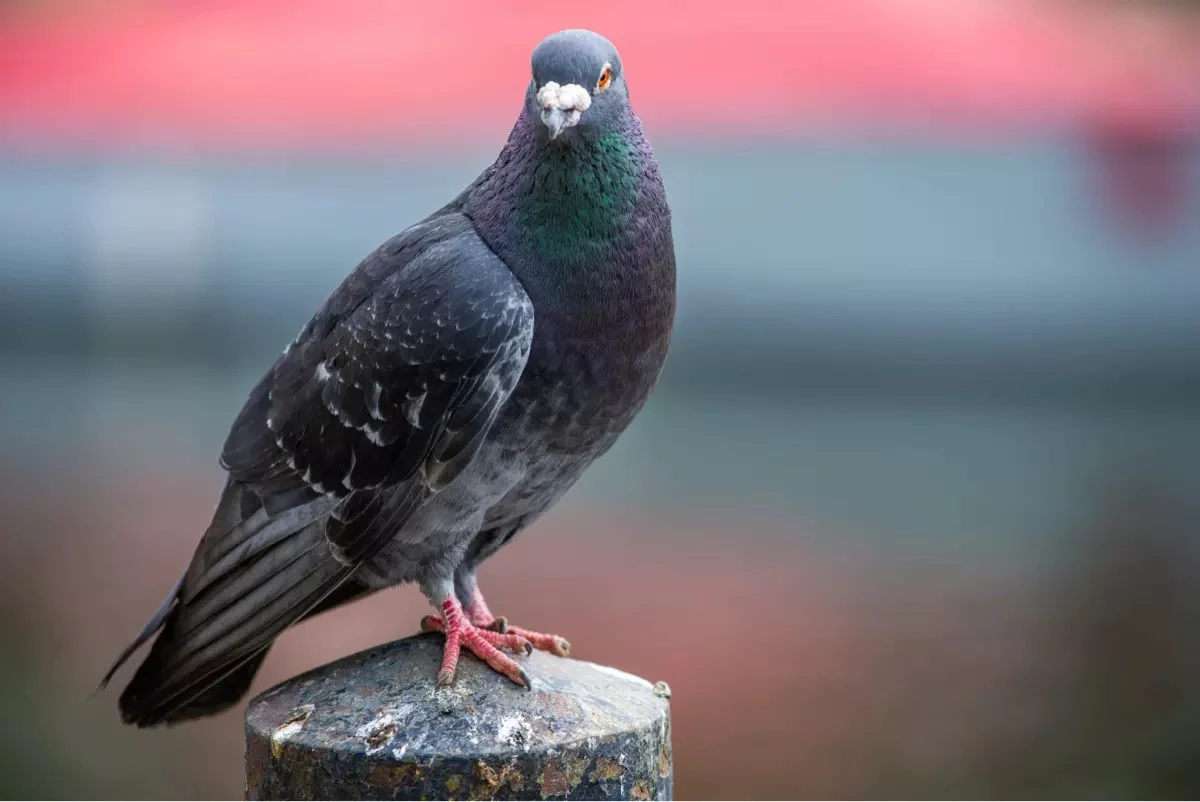
Pigeon droppings are the one balcony mess that is worth being careful about. Most of it you can deal with yourself if you do it the right way; some of it you shouldn’t touch. Here is the line between the two, and what to do about the pigeons once it is clean.
Why droppings are different from dirt
Fresh droppings are mostly a nuisance. Dried droppings are the issue: as they dry they can carry fungal spores, including the one that causes histoplasmosis, and bacteria such as salmonella. Sweeping dry droppings sends that dust into the air, which is exactly how people get sick from them. Droppings are also acidic, so left in place they etch concrete, stain tile and corrode metal railings.
Safe to clean yourself: a few spots, caught early
A handful of fresh or recent droppings on the railing or floor is a ten-minute job. Do it like this:
- Wear gloves and a mask. A disposable N95 or a snug cloth mask, and gloves you will throw away.
- Wet before you touch. Spray the droppings with water or a mild soap solution and let it soak for a few minutes so nothing goes airborne.
- Scrape and bag. Lift the softened droppings with a putty knife or a stiff card into a bag. Tie it and put it straight in the garbage.
- Sanitize the surface. A disinfectant cleaner, left on for the time the label says, then wiped. Rinse metal railings so the cleaner doesn’t sit on them.
- Wash your hands and the tools, or throw the tools away.
Don’t pressure wash or hose droppings in a condo: it spreads them, it breaks the building’s water rules, and it sends contaminated runoff to the balcony below.
Not safe to clean yourself
- Heavy build-up, where the floor or sills are coated rather than spotted. The amount of dust released is the risk, and so is the time you spend breathing it.
- Anything dried into a crust or into a corner you would have to chip at. Chipping is sweeping with extra force.
- If you are pregnant, immunocompromised, or have a respiratory condition. Histoplasmosis is usually mild in healthy adults; it isn’t worth the risk for anyone else.
- An active nest with eggs or chicks. See below.
For those cases, book the pigeon droppings cleanup add-on with a balcony deep clean. Specialists work in protective gear, wet everything down before removal, sanitize every surface, and then do the full clean: glass, railings, tracks, floor and furniture.
Nests, eggs and the law
Pigeons aren’t protected under federal migratory bird law in Canada, but several cities, including Toronto, have animal-care by-laws that make it an offence to harm a bird or destroy an active nest with eggs or young. The practical rule: leave an active nest alone, clean around it, and remove it once the chicks have left, usually within four to six weeks. We will tell you when it is safe to book the removal.
Keeping them from coming back
Cleaning removes the scent and the mess, but a ledge that a pigeon has chosen once is one it will choose again. What works on a condo balcony, in order of how often condo boards allow it:
- Remove the attraction. No food, no bird seed, no open compost, and clean the balcony so there is nothing to come back to.
- Block the roost. Pigeons roost on flat, sheltered ledges: the top of a partition, the frame above the door, a railing cap. Stainless spikes or an angled ledge guard make the spot unusable without hurting the bird. Most boards allow them if they aren’t visible from the street.
- Netting for balconies with an overhang that pigeons use as a cave. Effective, and it needs to be installed to the building’s specifications so it doesn’t damage the façade.
- Gels, ultrasonic devices and plastic owls mostly don’t work for long; pigeons habituate within days.
For spikes, ledge guards and netting at the building level, we work with VPRS Toronto, whose installations are approved by condo boards across the GTA. For roof-level pigeon protection, we work with PigeonShield. Ask your specialist, or mention it when you book.
Summary
A few fresh droppings: gloves, mask, wet it first, bag it, sanitize. Anything heavy, dry or near a nest: let someone in protective gear do it. Then make the ledge unusable, or the pigeons will do it all again next week.
Get an instant quote for a balcony deep clean and add pigeon cleanup on the booking page.
Questions
Still curious? Send us a message and we reply within one business day.
Are pigeon droppings dangerous?
Dried droppings can carry fungal spores and bacteria; the risk comes from breathing the dust when they are swept dry. Wet them first, wear a mask and gloves, and don’t clean heavy build-up yourself.
Can I remove a pigeon nest from my balcony?
Not while it has eggs or chicks; Toronto’s animal-care by-law protects active nests. Clean around it and remove it once the chicks have left, usually within four to six weeks.
How do I keep pigeons off my balcony?
Remove food, clean thoroughly, then block the roost with spikes, a ledge guard or netting installed to the building’s specifications. Gels, ultrasonic devices and plastic owls stop working within days.